When I left Prime Computer, I rolled my 401(k) into an IRA on the way out, and I kept that habit for the rest of my career. For years it looked like the smartest money decision I made. It also quietly cost me the backdoor Roth, and I didn't find out until years later.
Where My 401(k) Would Have Gone
In 1988, shortly after Prime bought Computervision, Bennett LeBow's MAI Basic Four made a hostile bid for Prime. To escape it, Prime agreed to a $1.3 billion leveraged buyout by J.H. Whitney and came out of it with about a billion dollars of debt. Prime's poison pill fully vested my pension and locked it in at my salary at the time. The layoffs that followed cut Prime's workforce by more than half. I stayed through them, and in 1992 I left for LSI Logic, rolling my 401(k) into an IRA on the way out.
Here's what would have happened to that money if I'd left it in the plan. In 1992 Prime renamed itself after the company it had bought, Computervision. PTC bought Computervision in 1998, and its 401(k) plan was sued over excessive fees and settled for $1.7 million in 2021. In October 2026, Schneider Electric agreed to buy PTC for $22.6 billion. Money I put in during the 1980s would be heading for its fifth owner, this time a French one. None of those decisions would have been mine.
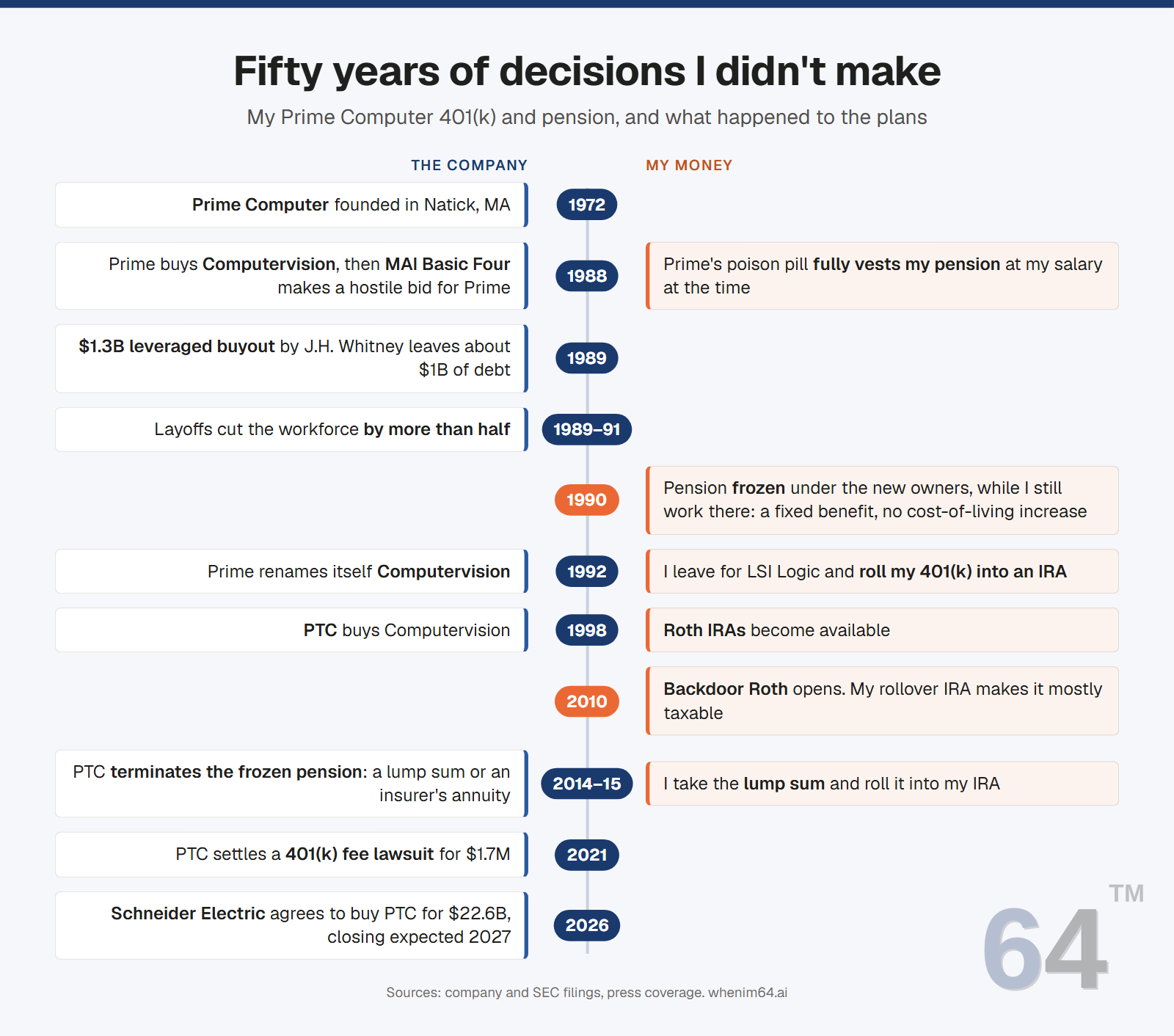
My pension did stay behind. It was frozen in 1990, under the new owners and two years before I left, and in 2014 PTC, a company I never worked for, began terminating the plan. I could take a lump sum or an annuity PTC bought from an insurance company. In 2015 I took the lump sum and rolled it into my IRA. The lump sum was about what the payments were worth at the interest rates of the time, and the payments themselves had no cost-of-living increase. I had a mild worry about the insurer, but mostly I wanted to manage my own money, and I've never liked annuities as an investment.
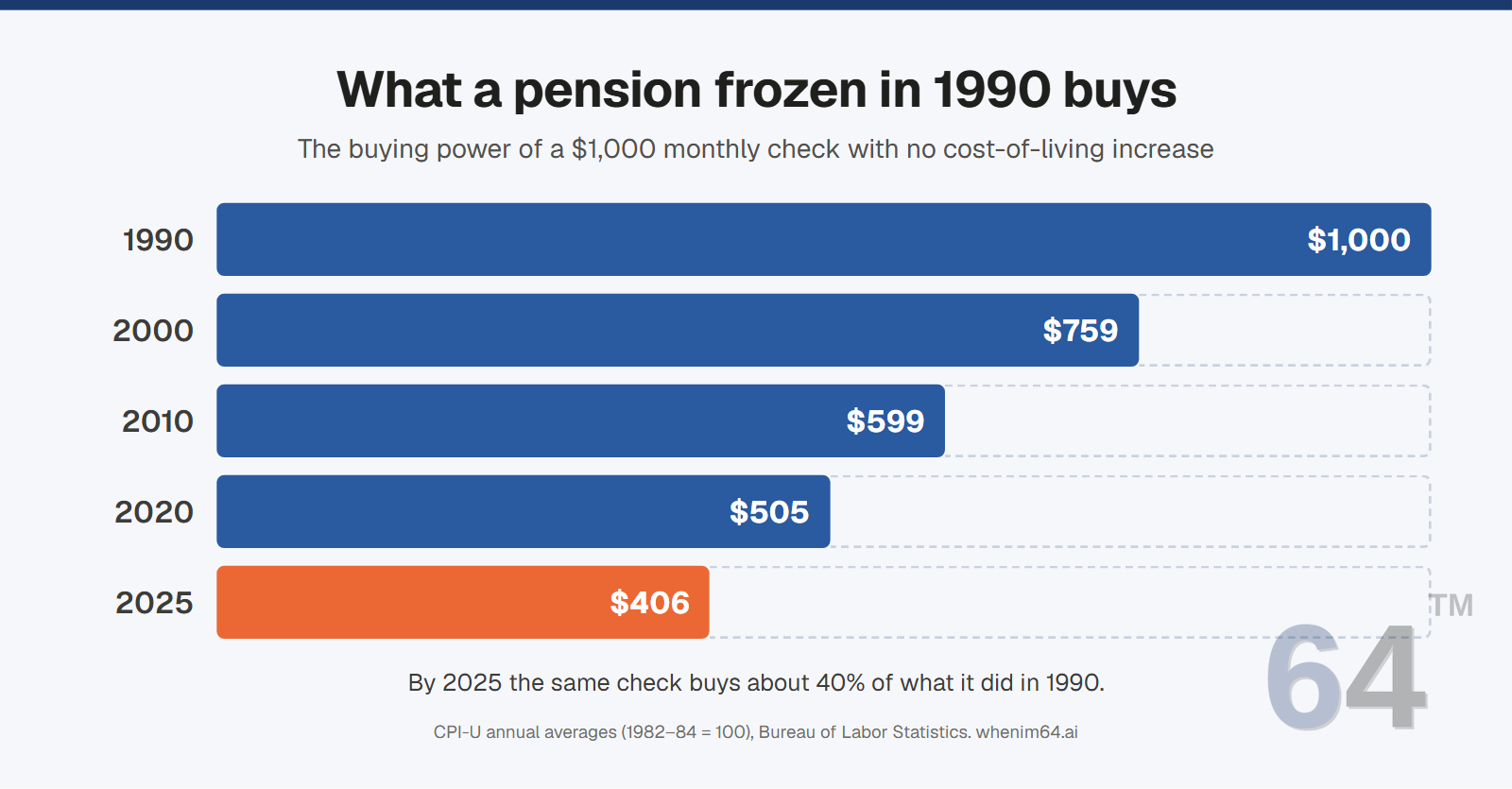
That's the case for rolling over: when money sits in an old employer's plan, the plan makes the decisions. But control has a price, and it depends on where you are in your career.
Why Rolling Over Usually Wins Near Retirement
By the time you retire, an IRA does almost everything better.
- Roth conversions on your schedule. The years between retiring and claiming Social Security are often the cheapest time to convert, a little each year, filling a tax bracket. Many plans let a former employee take only a full distribution or fixed installments, which makes that hard or impossible. I wrote about those years in Crossing the Tax Valley.
- Qualified charitable distributions. From 70½ you can give up to the annual limit straight from an IRA to charity, tax-free, and it counts toward your RMD. You can't do it from a 401(k).
- One set of RMDs. IRA required distributions can be added up and taken from any of your IRAs. A 401(k)'s RMD has to come out of that plan.
- Your own investments, at your own cost.
What Rolling Over Costs You Earlier
Earlier in a career, an IRA rollover can close doors you don't know are there.
The backdoor Roth. Above the Roth IRA income limits, you can contribute to a nondeductible IRA and convert it to a Roth. The catch is the pro-rata rule: the IRS looks at all your pre-tax IRA money on December 31, and only the after-tax share of the conversion is tax-free. A $500,000 rollover IRA turns a $7,500 backdoor contribution into a mostly taxable conversion. Money in a 401(k) doesn't count. That's what my rollover habit did to me. Not that I could have seen it coming. When I first rolled over, Roth IRAs didn't exist; Congress created them in 1997. The backdoor only opened in 2010, when the income limit on conversions went away. The rules change, so when keeping an option open costs you nothing, keep it open. I wrote about my other backdoor Roth mistake in Don't Fall into the Backdoor Roth Trap.
What I didn't know: it can be undone. If your current employer's plan accepts incoming rollovers, you can move your pre-tax IRA money into it. Your IRA balance drops to zero, and the backdoor opens again. After-tax money can't go into the plan, so it stays behind, ready to convert. This is the reverse rollover.